
By Martin Charlz G. Tanodra
Layout by: Lou Margaret S. Nebit
Every March, we celebrate Women’s Month. It serves as a reminder of the long and continuing struggle of women to be recognized as equal to men in law, in society, and in public life. More than celebrating women’s achievements, it is also a time to reflect on the many ways their dignity, autonomy, and voices continue to be challenged. One issue that remains deeply relevant today is how women’s identities and voices are sometimes used without genuine consent in politics and media.
Last March, one of the issues that gained public attention involved the remarks of Quezon City Representative Bong Suntay concerning actress Anne Curtis. Regardless of political intent, the incident sparked discussion because it highlighted how a woman’s identity can be publicly invoked without regard for how she may feel about it. If the same statement had been made by an ordinary person, it might not have drawn much attention. However, because it came from a public official, someone whose words carry influence in legislation and governance, it became more significant. Public figures shape public behavior, and their words can either challenge or affect our social norms.
This issue does not happen only to celebrities. Every day, many women experience similar forms of disrespect in schools, workplaces, public spaces, and even on the streets. Women, whether public figures or ordinary citizens, should not have their names casually used to attract attention, entertain others, or strengthen political messaging.
As a Bedan law student, and even simply as a person, I believe that respect begets respect. My parents, especially my mother, always reminded me to respect women and to remember the important role they play in society. Women become mothers, teachers, leaders, and individuals who help shape future generations. Because of this, we should always be mindful of what we say not only in face-to-face interactions but also in the digital world, where it leaves a digital footprint that can cause lasting harm.
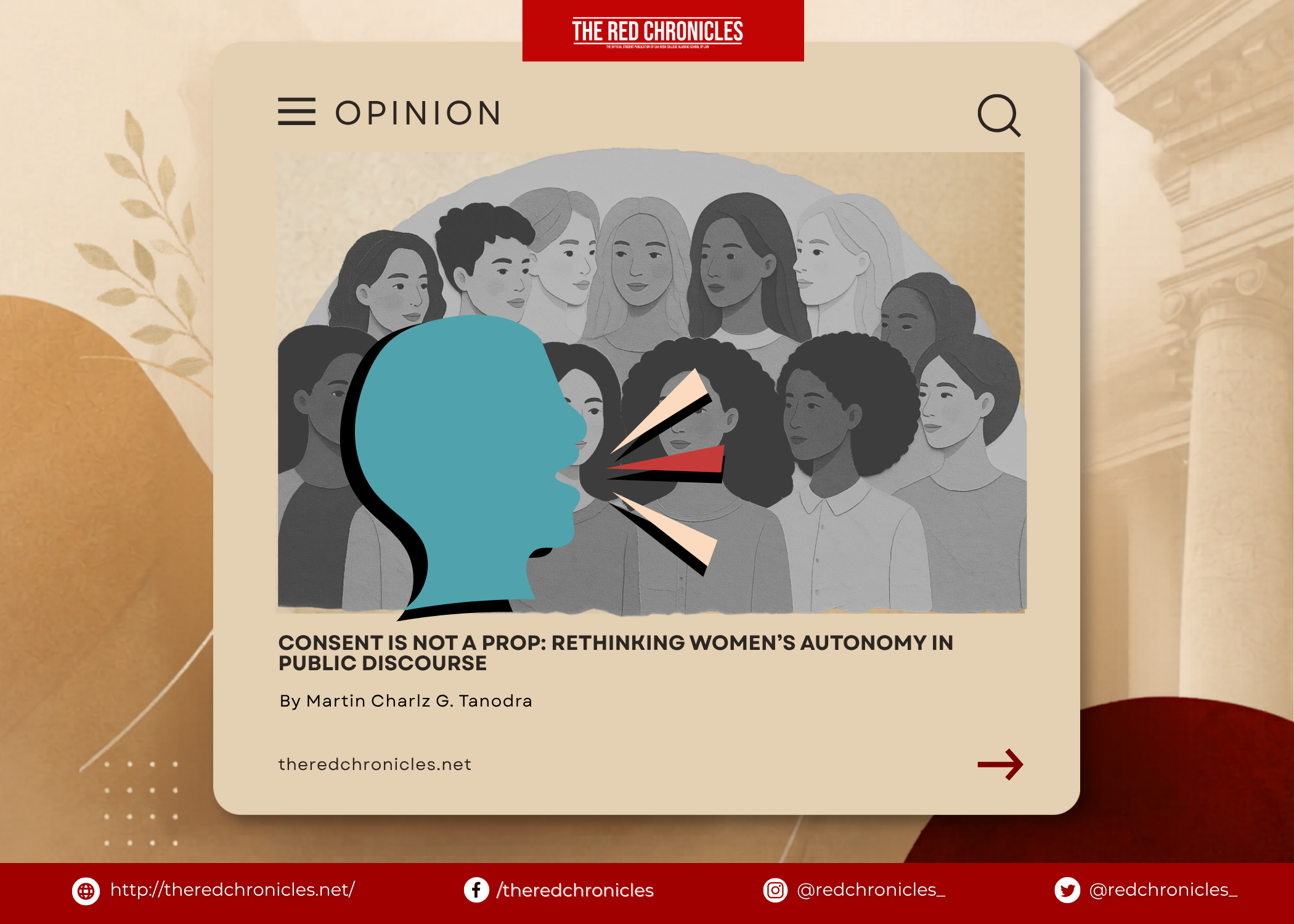
According to Black’s Law Dictionary, consent is defined, in part, as “a voluntary yielding to what another proposes or desires; agreement, approval, or permission regarding some act or purpose.” This definition reminds us that consent must be freely given. When a woman’s name, image, or identity is used by others for political statements, publicity, or entertainment without her genuine approval, it reduces her dignity into a tool. In such situations, she ceases to be treated as an individual with rights and becomes a mere prop for someone else’s agenda.
Consent is not a prop to be displayed when convenient. It is a principle rooted in dignity and human rights. We should never objectify women or treat their identities as tools for personal, political, or social gain. Before speaking or acting in ways that may demean women, we should think of the women in our own lives, such as our mothers, sisters, daughters, and friends. Respecting women is not simply a legal obligation, but it is a moral responsibility that shapes the kind of society we choose to build.
