
By Iris Angela S. Lat
A slender man in a red loose shirt, backpack, and placard shouted — Ibaba ang presyo ng fishball… — as he heavily perspired through his own slate of emotions. He was caught on camera, shouting passionately along the streets of Manila during the mass protest held last 21st of September and heeding for the government to lower the prices of the street food. It was a call which seemed loud for a subtle change; in reality, it was a cry for access to basic needs, unveiling that the Philippines was already on the verge of a food insecurity crisis.
Not a day has gone by when the same man, later identified as Alvin Karingal, was caught in another crisis: an unexpected bloody ordeal of arrest and unjustified detention behind bars. From his outburst of passion, he gradually became tired, helpless, sleep-deprived, and frustrated inside Manila Police District Station 10 Pandacan Jail. He shared the same fate with 215 persons, including minors and bystanders.
While the corrupt officials feasted on buffets, the protesters behind bars were starving to death and suffering from abuses by the law enforcers — a fact that even a commoner could not turn a blind eye to. This alarming incident has paved the way for human rights lawyers to take action and help the detainees.
The Trillion Peso March
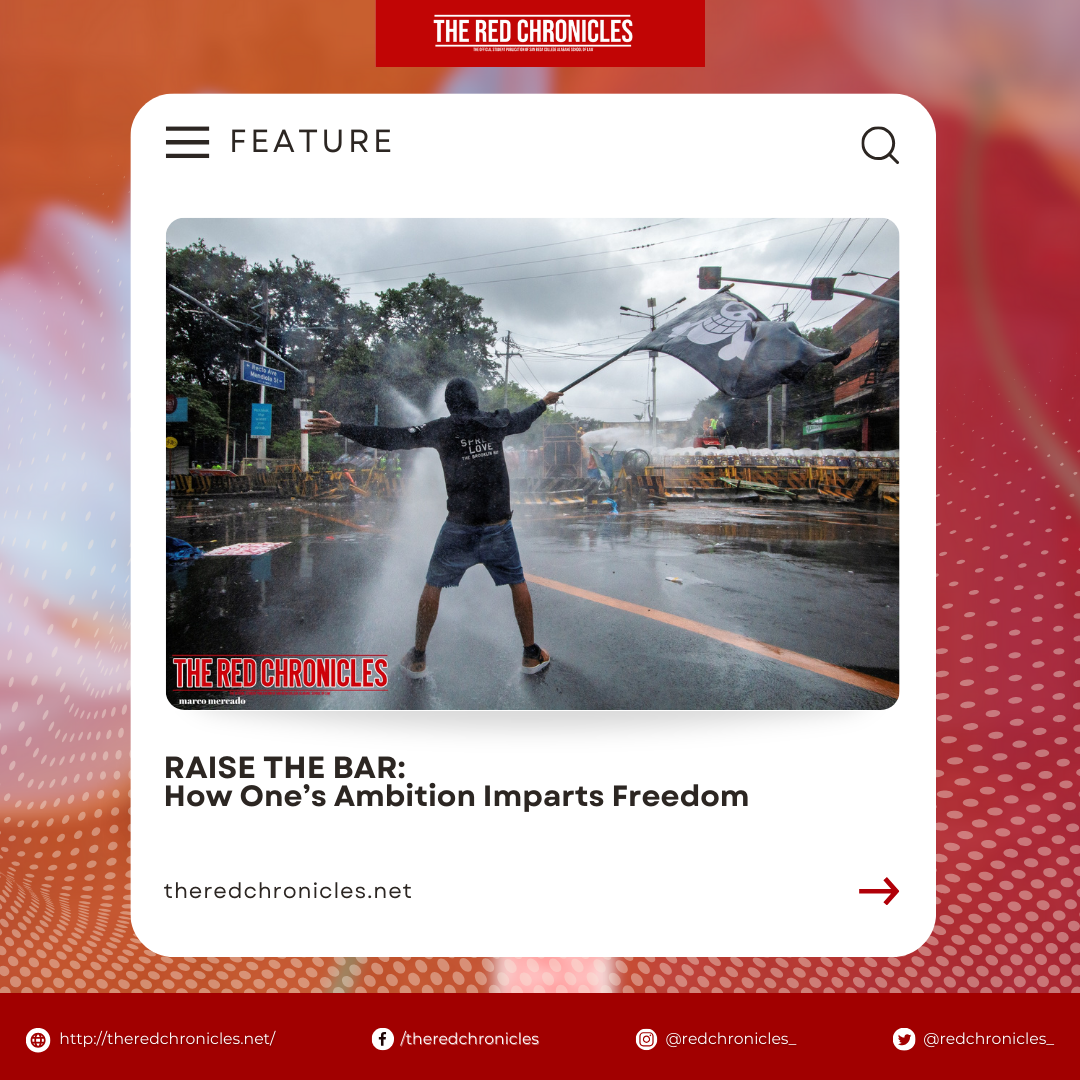
The mass protest called the “Trillion Peso March” held last September 21, 2025, was organized by various organizations to condemn corruption. The protesters demanded accountability from the government and the imprisonment of corrupt officials and individuals involved in the recent flood control project anomalies. Although these flood control projects started decades ago, budget appropriations for them have gradually increased from 79 billion pesos to 200 billion from 2016 to 2021. While the Filipinos diligently pay their taxes out of belief that it will be put into good use by the government, the fraudulent means of politicians are instead seizing the benefits of these same projects to sustain their daughters’ lavish lifestyles — a scandal which triggered the working class to protest along Luneta Park and Mendiola.
The turn of events
When the programs in Luneta Park were about to conclude peacefully, an outrage ensued in the streets of Mendiola: A fire ignited, bottles of beer and wine were thrown, placards and street signs were burned, and some establishments were damaged. This furious scene unleashed the beast out of the law enforcers, who arrested unlawfully and exerted unnecessary force. The police started to work and arrest the masses in the scene, who were brought to the city jails to suffer prolonged detention.
The torture, violence, and harassment did not end amidst the protest. Many student leaders and activists still receive subpoenas even after the protest, charging them with various cases like sedition and rebellion; a repression of the irrevocable voices of the masses who continue to fight corruption.
Lawyers in Action
While the families of the arrested vehemently cry for mercy, human rights lawyers from the National Union of People’s Lawyers (NUPL), KARAPATAN, Alyansa Laban sa Korapsyon at Brutalidad ng Pulis (AKAB), and Public Interest Law Center–Philippines (PILC) work hand-in-hand to drop the charges and free the persons arrested.
One of these lawyers is Atty. Maria Sol Taule, who promptly helped Alvin. She was known to be a people’s lawyer and an activist. Her advocacies have helped Filipinos, especially the underprivileged, to be afforded due process.
As early as college, Atty. Taule was involved in progressive organizations as an activist. She was already immersed in the deep-rooted concerns of the different sectors: the farmers, laborers, indigenous peoples, and women.
According to her, the advocacies of a human rights lawyer are not limited within the four corners of the courtroom. Beyond that are the injustices done outside — a bigger picture which the Filipinos must know and see. And the aspirations of the farmers, laborers, and indigenous peoples are also the aspirations of the human rights lawyers.
While Atty. Taule has the advantage of being able to move in a wider network, immersed with the masses for being an attorney and an activist, she is nevertheless faced with the adversaries of accusations and redtagging.
She believes that the justice system is flawed, highlighted by the victims of the extrajudicial killings during the War on Drugs perpetrated by the Duterte administration. Atty. Taule expressed that many of the underprivileged are always subject to double standards of justice, hence the prominent and powerful can never experience the overcrowded jails and delay in the progress of their legal cases.
Lawyering — an ambitious profession?
When asked, Atty. Taule answered that yes, lawyering is an ambitious profession, particularly for the lower middle class, because it takes more than money and resources to study law. Some students need to work because they have families to support. It is not only the study of law that is a privilege, but so is education in general.
According to Atty. Taule, choosing human rights lawyer as a profession is not an easy path. While many think of lawyering as a lucrative profession reflected on TV series, in reality, human rights lawyering is not a glamorous profession. Money is not the driving force, but the altruistic feeling of being part of the movement that demands change, justice and accountability. In being a human rights lawyer, there is a different driving force and reason. A bigger aspirations and advocacy for change. While it may be the hardest decision in your life, it will be worth it in the end if you find yourself being part of the movement — no regrets, but fulfillment.
Lawyering is a noble and ambitious profession. It is undoubtedly a career path which requires years of dedication in studying numerous cases, codal provisions, and keeping your sense of empathy intact. And after passing the bar and taking the oath, attorneys have the option to decide which areas of legal specialization they are to take — but whatever path it may be, it is their ambition that will free the masses and afford them due process. And it is this same ambition that will cultivate them as agents of justice and stewards of peace, similar to what Atty. Taule does for the Filipino people.
