
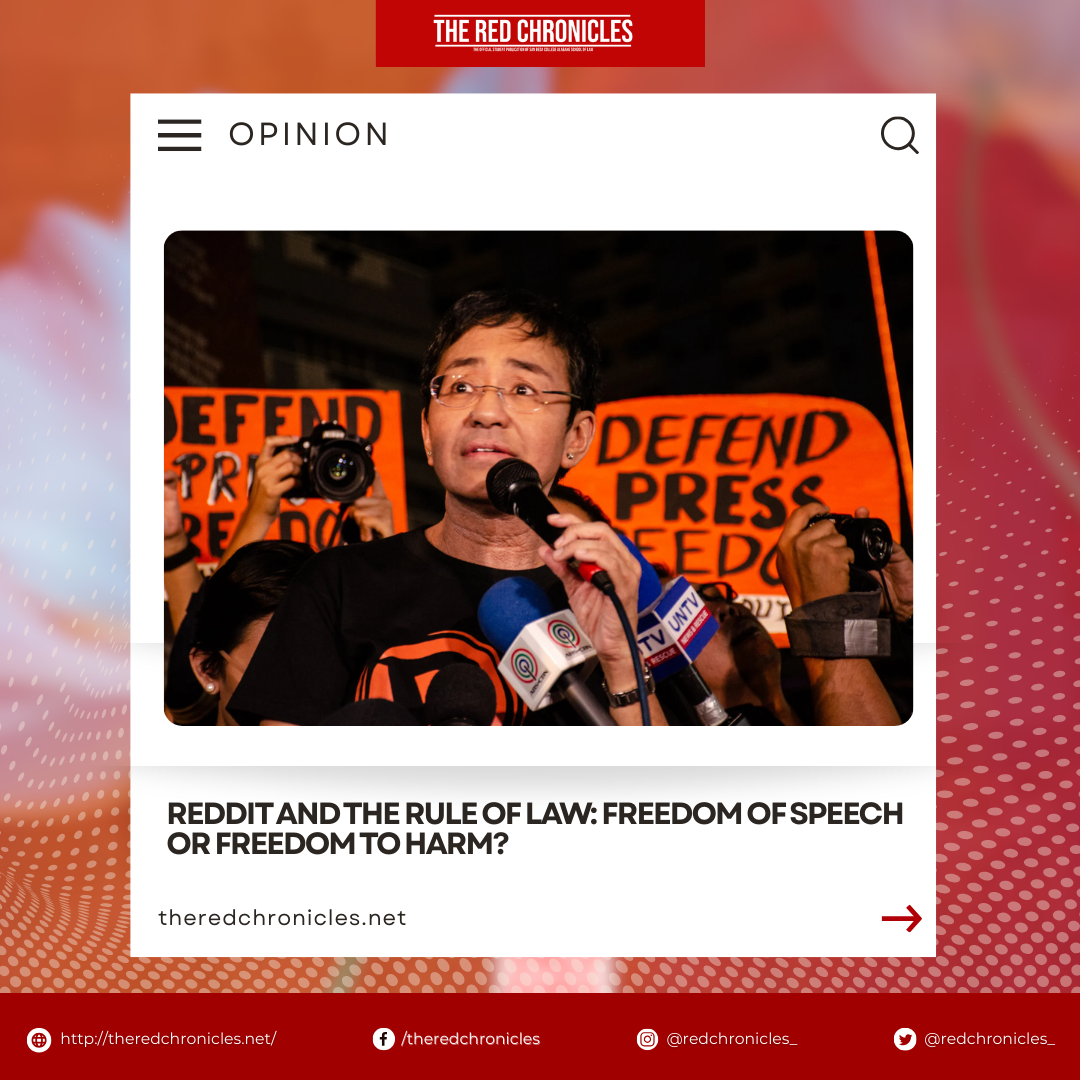
By Martin Charlz Tanodra | Photo Courtesy: Nur Photo
Have you ever hit “post” on a comment, perhaps fueled by anger or disappointment, targeting a professor, classmate, or organization on Reddit or any other social media platform? The rapid evolution of communication has given this new generation of Filipino law students an unprecedented public forum to express the challenges and disappointments of their legal education journey. While this open dialogue is a manifestation of our constitutional right to freedom of speech and expression, the crucial question we must address is: Does this freedom extend to the right to arbitrarily judge, embarrass, and potentially defame others?
The 1987 Philippine Constitution guarantees free speech, but jurisprudence makes it clear that this right is not absolute. As law students, we must recall the doctrine of subsequent liability, which dictates that while the exercise of free speech cannot be prior restrained (censored before publication), the speaker can be held accountable for any abuse of that right after the fact.
When students use platforms like Reddit to launch personal attacks, engage in cyberbullying, or spread malicious falsehoods against a person, they cross the line from protected expression into actionable harm. Such acts potentially constitute violations under the Revised Penal Code on Libel and the Cybercrime Prevention Act of 2012. These laws serve as necessary legal limitations on speech to protect the fundamental rights of others, namely the right to dignity, honor, and reputation.
The current environment of anonymous bashing is not merely a legal problem; it is an ethical and moral crisis for future members of the Bar. The Rule of Law is upheld by lawyers who operate with integrity, candor, and respect. When a law student resorts to posting hate comments or engaging in character assassination against a peer or faculty member, it reflects a profound deficiency in the moral character required of a future legal professional.
This kind of behavior, which constitutes an abuse of digital anonymity, can be construed as an act of moral turpitude—a phrase used in legal and ethical contexts to describe an act of baseness, vileness, or depravity in private and social duties. While the platforms may offer a shield, the damage is real, causing significant mental and emotional distress to the injured party, and even tarnishing the institutional reputation of the law school.
It is a sobering reality that in this technological era, what is published online lives on as a permanent digital footprint. What is posted today, even anonymously, can be archived, screenshotted, and become accessible to future employers or, significantly, subject to judicial notice in a legal proceeding. The assertion that anonymity provides complete protection is a fallacy, as digital forensics and legal subpoenas can often trace an internet user’s identity.
Therefore, our freedom of speech must be exercised with a heavy sense of responsibility. It should be used for constructive criticism aimed at institutional improvement or intellectual discourse, not as a license for destructive behavior. Vicious personal attacks and baseless accusations do not justify the use of this right; they only reflect an internal lack of professionalism and self-restraint.
As future officers of the court, let us practice the most fundamental lesson of the law: Think before you click! The power of your words should build a case, not destroy a life.
