
By Iris Angela S. Lat | The Red Chronicles
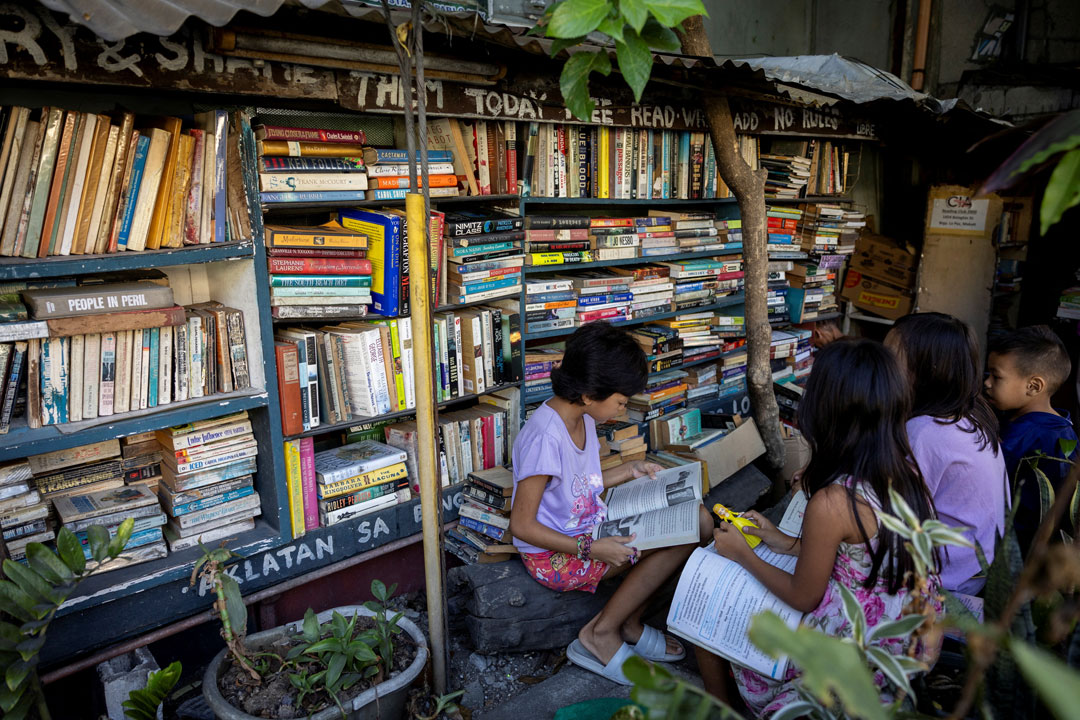
Photo Courtesy | Reuters
Behind the realm of expensive coffee shops and co-working spaces are the non-existent public libraries mandated under R.A. 7743. Other than the lack of implementation by the local governments of the 1994 Law, there was a lack of licensed librarians all over the Philippines. The lack of licensed librarians, on the other hand, roots itself in the lack of universities that offer Library and Information Science, or BLIS Program.
Regardless of the program offering, only a minority of college applicants would dare to delve deep into its wonders by reason of lack of information, resources, and low salary grade.
The lack of libraries in the Philippines might seem like nothing but thin air, but in reality, it has far-reaching implications for the illiteracy rate among the students, a significant percentage of whom are “learning poor” or can’t read and write basic texts.
It seems trivial and colloquial, but the local government seems to prioritize their circus of marketing schemes and credit-grabbing opportunities over the educational successes of their constituents. Instead of actually allocating its resources to building a library and humane educational environment – an environment conducive to the welfare of students especially the disadvantaged, it merely focused on another propaganda of economic growth by building and investing in businesses in line with their tagline.
Imagine a local elective readily plastering himself into a graduation picture and a huge tarpaulin in a public school, its face bigger than the scholar himself. While it might look deceiving, it is actually demeaning to the latter.
It would hastily stick its melodramatic face into a birthday cake, a coffee mug, a shirt, and whatever merchandise was readily available on hand. For all we know, it might even have hired a public relations officer and social media manager, the wage of which comes from our own taxes.
Instead of prioritizing the allocation of budget to bridging the educational gaps, it would just dare to grab the achievements of the hardworking scholars who remained calm and sane despite the poor environment and corrupt practices.
While poverty plays an important role, it is the lack of educational initiative from the local elected officials that actually paved its way towards the literacy crisis, with the absence of public libraries as the apparent sign.
Admittedly, I did not fall for the propaganda. But I did fall into a rabbit hole, thinking what could be the best possible solution to the illiteracy crisis — maybe, to not vote and settle for a substandard set of local officials who wouldn’t dare touch a book.
NOTE TO THE READERS: Volume XVIII, Issue 2, penned and published by The Red Chronicles, is a Back Issue for the Publication Year 2024-2025. Note that this article aligns with the events relevant to the previous Academic Year 2024-2025. For further viewing of the same, you may view the flipbook version or visit our official website at theredchronicles.net.
