
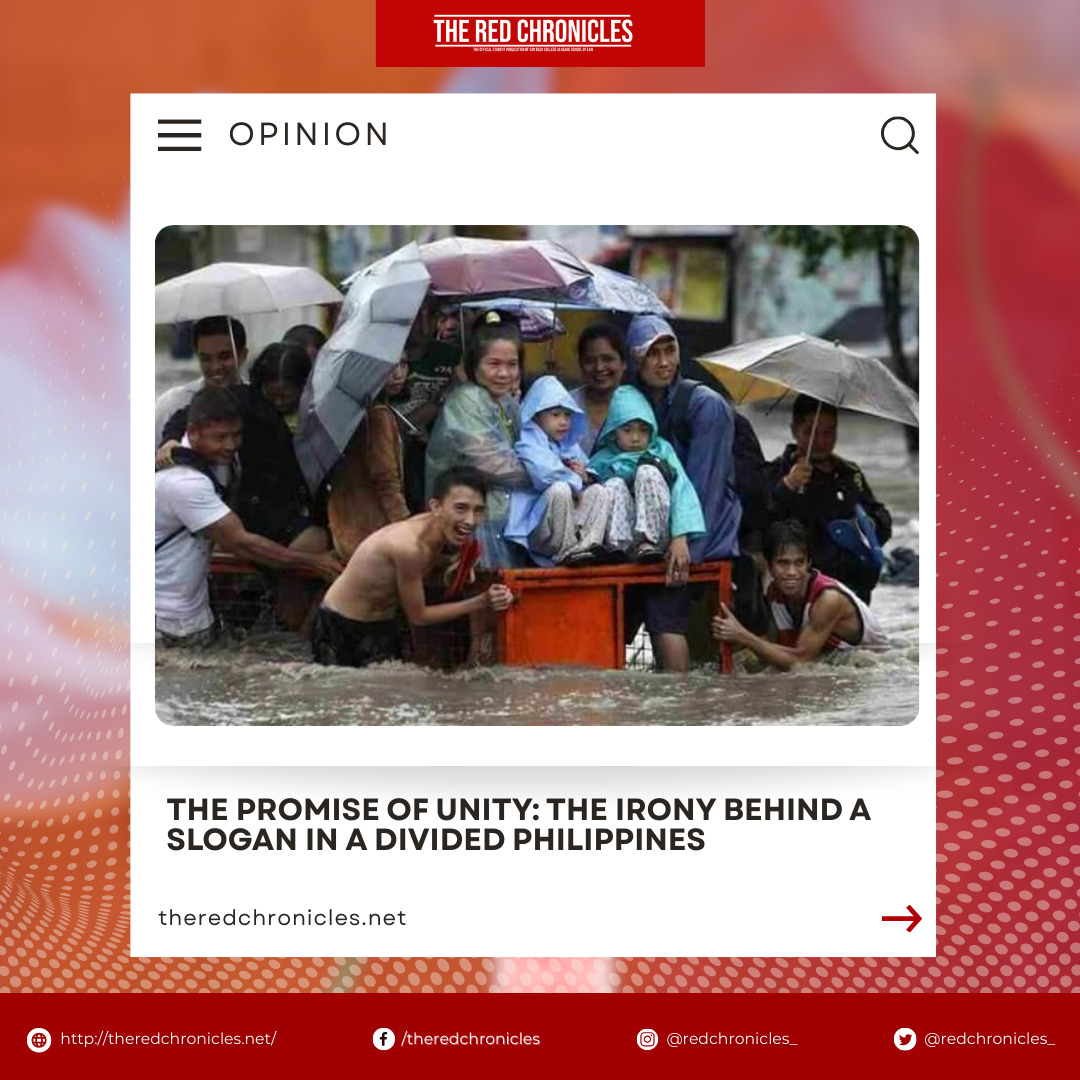
By Janica Shanelle Yu | Photo Courtesy: Romeo Ranoco
Unity. That was the rallying cry of the political partnership that now governs the country—a symbolic merger of the Northern Dynasty and the Southern Stronghold that captivated more than 30 million Filipino voters. For many, the slogan felt like a lifeline, a historic moment when long-standing regional divides seemed to dissolve as two powerful blocs stood side by side. But to others, it might as well have been the final nail in the coffin of an already struggling country.
Ironically, it took only a few years for that once-celebrated alliance to fracture. Perhaps they had taken “Unity” too literally and recoiled violently from the impact of their own partnership. Yet this breakup between former allies only revealed what we already knew: Unity in the Philippines remains promise more than practice, especially in a nation still plagued by political fanaticism and leaders who refuse to build institutions stronger than the infamous legacies of their own last names.
A familiar pattern followed the implosion. Political theater erupted. Headlines were dominated by dramatic exposés and a myriad of controversies, each camp is now trying to pin on the other. Meanwhile, ordinary Filipinos watch with a mix of fatigue and frustration. Supporters who once rallied behind the “Unity” tandem retreated to their respective corners, eager to topple the figures they once championed. And while critics may feel vindicated, the “satisfaction” is meaningless; every blow exchanged is just friendly fire, wounding Filipinos all the same.
In this new age, social media serves as kindling for the dumpster fire that is Philippine politics. Mirroring the irony of the campaign slogan, the platforms designed to connect us also excel at breaking us apart. Algorithms lock users into echo chambers that harden biases, reward outrage and quicken the spread of misinformation. Online political identity is now tribal allegiance; those who aren’t with “us” are enemies–cancelable, irredeemable. And amidst this arena of loyalties, all nuance is drowned by static noise.
Conflict over politics is a natural facet of democracy. Political debate and disagreements are actually seen as healthy. But with our current reality, is it really the time to cling stubbornly to allegiances? If we continue to define ourselves by the political colors and family names we support, we only perpetuate this broken system that’s never served us. To confront this obvious rot, we have to unclench our pride long enough to see the common ground we stand on.
If unity ever has a chance of being more than a co-opted slogan, we must reclaim it for the people. That means rejecting empty promises, political theatrics, and blind regional allegiances. We must replace the rusty parts of this corroded machine by condemning the leaders who see their seats as thrones, and installing public servants committed to moving the country forward with us. True unity demands the citizens to act, question, and insist on integrity now–because God knows our country cannot afford another generation trapped in this cycle that robs us of greatness just to enrich the ambitions of a few.
